
Stuffed And Starving
There is no free lunch.

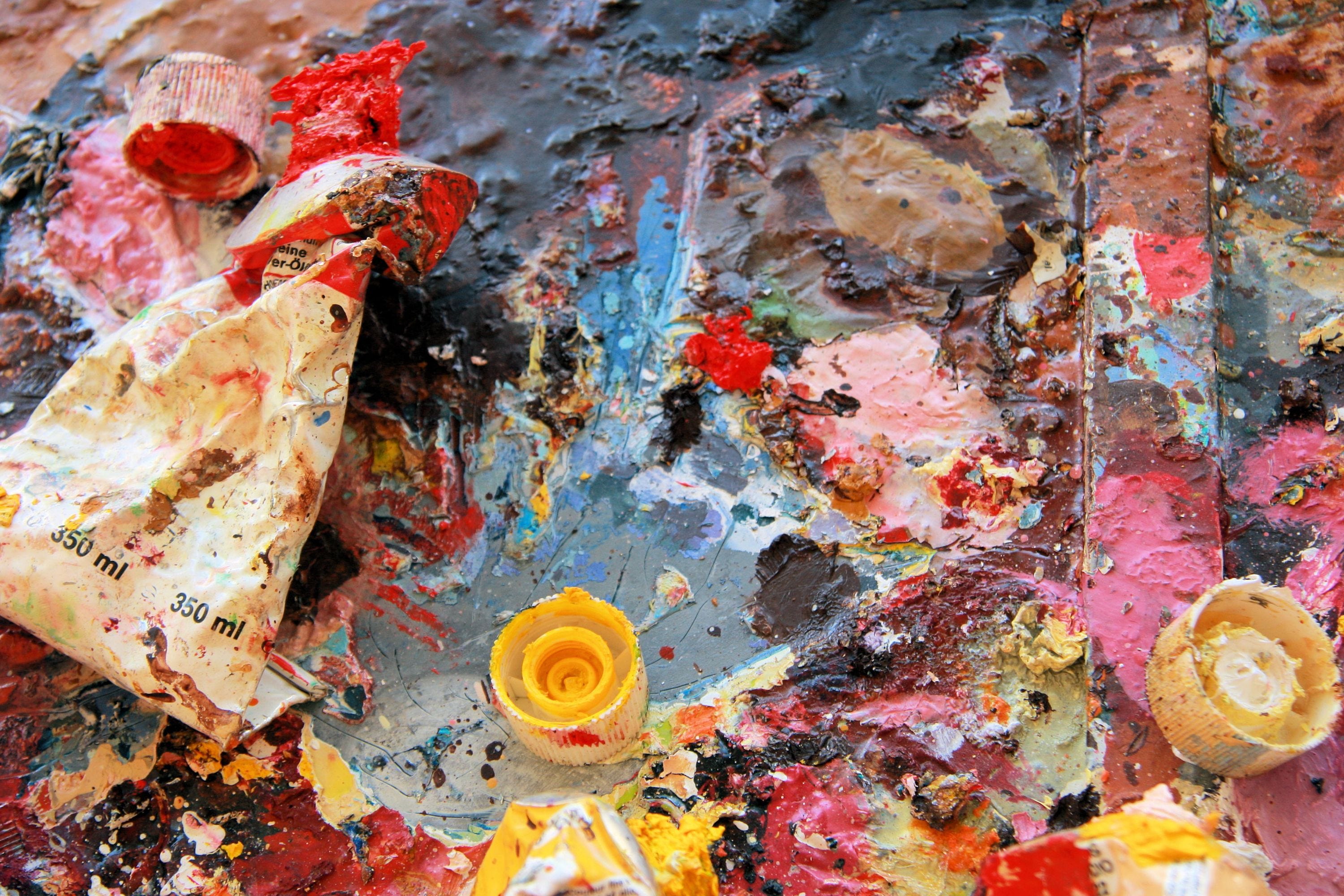
Seven documents, one prototype, three visuals, and a product philosophy. All from a single conversation that started with a neuroscience paper. By midnight I had more material than I’d produced in some entire months last year.
I need to start knitting.
I mean that almost literally. Something with friction. Something slow and physical that doesn’t multiply every time you touch it. Because whatever this is - this capacity to go from spark to fully-formed thing in hours - it’s extraordinary, and it’s doing something to me I can’t quite name yet.
Here’s what I was told for years, as someone with too many interests and not enough lanes: your time is coming. The world is getting more complex. Specialists will hit walls. You, with your range, your pattern-matching, your cross-pollinating mind you’ll thrive.
Then AI tools arrived and the gap between seeing and making shrank to almost nothing. The full pantry I’d been stocking for years - all those ideas, half-formed visions, connections I’d been carrying - finally had a kitchen that could keep up.
So I cooked. And cooked. And… got cooked.
And at some point I looked up and realised I was surrounded by dishes and couldn’t taste any of them.
I keep seeing people online saying things like: “I have no time to sleep! there’s so much I can build now!” And I recognise the feeling. The intoxication of it. The genuine amazement. But I also recognise the shape, because we’ve seen it before.
We saw it with food. We industrialised production, removed the constraints of season and preparation and scarcity, and got an endless buffet. Godsend or cruelty? Both, it turned out. We got abundance and lost nutrition. Gained convenience and developed an epidemic of bodies that are simultaneously overfed and starving.
We saw it with clothing. Fast fashion gave everyone access to everything, all the time. The constraint of cost and craft disappeared. What migrated in was a different kind of poverty: closets full of things that fit nothing, mean nothing, last no time at all.
We saw it with connection. Social media gave us infinite access to each other and produced the loneliest generation in recorded history. A world that got superconnected and totally disconnected at the same time.
And now we’re seeing it with creation itself.
The pattern is always the same, and it has a kind of structural ruthlessness to it: every time you lower the bar in one dimension, you raise it in another. Every increase in freedom quietly increases the demand somewhere else. The cost never disappears. It migrates. And we almost never notice where it lands until the bill arrives.
Junk food that lacks nutrition. Fast fashion that fills your wardrobe and empties your taste. A thousand followers and no one to call at 2am. And now: infinite creative output and a growing inability to feel which of it matters.
It’s the Midas problem. Everything you touch turns to gold. And you’re starving to death surrounded by it.
Here’s what I think the pattern reveals, if you look at it structurally: the constraint was doing a job.
The friction between having an idea and seeing it realised used to be enormous. Weeks, months of wrestling something into form. That felt like a limitation - and it was - but it was also where digestion happened. In that gap between conception and creation, you discovered whether you actually cared about the idea or were just infatuated with it. The difficulty didn’t just slow you down. It filtered. It separated signal from noise not by asking you to evaluate your own enthusiasm - we’re terrible at that - but by making the mediocre ideas too expensive to pursue.
That filter is gone now. And the job it was doing hasn’t disappeared. It’s landed on you.
The environment used to hold you. Sometimes it held you back — and we rightly wanted more freedom. But it was also doing the work of discernment, of digestion, of stopping. Now that the environment isn’t doing that job, the pressure is entirely internal. And that requires a completely different skill set than the one we celebrated when the doors flew open.
The bar hasn’t been lowered. It’s been moved. From can you execute this to should this exist at all, and do you have the inner architecture to know the difference. That second question is harder than the first one. Much harder. But because it’s invisible — because your screen is full of shiny output - it doesn’t feel harder. It feels like you’ve been handed a supercar. And you have. But supercars without guardrails aren’t freedom. They’re a flight test.
I’ve been watching this with the smartest people I know. Friends with real taste, genuine vision — the kind of perceptual depth that used to be bottlenecked by execution. They’re generating at an industrial pace now, and the more they produce, the less sure they become about any of it. Every prototype spawns three more ideas. Every essay opens four doors. The volume goes up on every instrument at once and the music gets harder to hear.
Nobody warned us: a mind already prone to divergent thinking, armed with tools that reward divergence, doesn’t become more creative. It becomes more prolific. And those are not the same thing.
Prolific feels like creative and that’s the trap. You end the day with documents, prototypes, drafts. It looks like progress. But there’s a hollowness to it, like eating a meal you can’t remember an hour later. You generated but you didn’t choose. You produced but you didn’t digest.
This is the creative equivalent of a credit card. You’re spending freely, building up a balance, and it feels fantastic — because the bill hasn’t come yet. We don’t know exactly what that bill will look like. But the pattern from every other domain where we removed the stopping cues suggests it’s coming, and it won’t be small.
I'm not saying stop producing. I don't think that's the answer, and it's not what I want for myself either. But I think we need to fundamentally change our relationship with the output. All those documents, prototypes, frameworks generated in a white-hot evening - they look finished. They arrive with the polish and structure of a final product. But they're not the real thing. They're sketches. First impressions. Raw material that still needs the slow, human pass: the weighing, the doubting, the asking is this actually true or just looks sleek? The danger isn't in making them. It's in mistaking them for done.
And there's a deeper trap inside the freedom: the paradox of saved time. You saved six weeks of execution. Wonderful. But that time and energy doesn't just vanish into leisure. It needs to go somewhere: into the discernment, the digestion, the sitting-with that the old process used to force on you. You didn't save the effort. You relocated it. And if you don't spend it deliberately, it doesn't get spent at all, and you end up with a hard drive full of impressive-looking sketches and nothing that's actually yours.
So what actually becomes valuable when making gets cheap?
Not creativity, at least not the kind we usually mean. Generating options? AI already does that. Producing polished output? That’s what’s being commoditised. What doesn’t commoditise is something quieter. The ability to feel — not just analyse, feel — which of twelve directions has life in it. The willingness to throw away something that works because you sense it isn’t true. The discipline to stay with one idea long enough to discover what it is, instead of sliding to the next because sliding is now frictionless.
Call it discernment. Call it taste. Call it the thing the environment used to provide — through sheer cost and difficulty — that now has to come from inside you.
This is where the bar went. This is the demand that migrated.
David Epstein’s Range argued that generalists were built for complex environments where old maps fail. I think he’s right. But range without friction isn’t range. It’s spinning. The generalist advantage only holds if it’s paired with something the environment no longer supplies: the willingness to stop.
The people I find most compelling right now aren’t the fastest builders. They’re the ones who seem to have grown the internal version of what the world used to provide externally — some almost physical sensitivity to the difference between alive and merely competent. Who look at their output and know, without a rubric, which ten percent has blood in it. Who have the nerve to let the rest go.
They’ve built their own stopping cues from the inside. Not because they lack ideas, but because they understand that in a world with no walls, the most valuable thing you can build is a floor.
I don’t want to go back. The tools are extraordinary and I don’t want to return to months of wrestling one idea into shape. But I think the real work of this moment isn’t learning to generate. We’ve got that covered. It’s learning to reconnect — not to more, but in a different dimension. To depth instead of breadth. To what we are really about. To the single idea that survives the question: do I still want this when I can’t make anything at all?
The answer probably looks less like a new tool and more like an old one. Less wifi. More wool. Less what can I build tonight and more what am I actually hungry for.
Just one question that's been nagging at me on this one. I agree with the point you're making. But how do you guard against the risk of being overly perfectionist with this approach?
I've never suffered from perfectionism (I have other blocks!) but I can see lots of people not shipping anything at all, because they set the bar too high for themselves, overanalyse, etc.
Another cracker of an essay. Lots of inconvenient truth we need to hear.
We invented play because we love a bit of difficulty, but not too much. But then there is serious play, which deep down we love even more. Yet we circle away from it, and take the path of least resistance instead. The secular equivalent of mortal sin.