

The Great Escape
On digging tunnels with a spoon

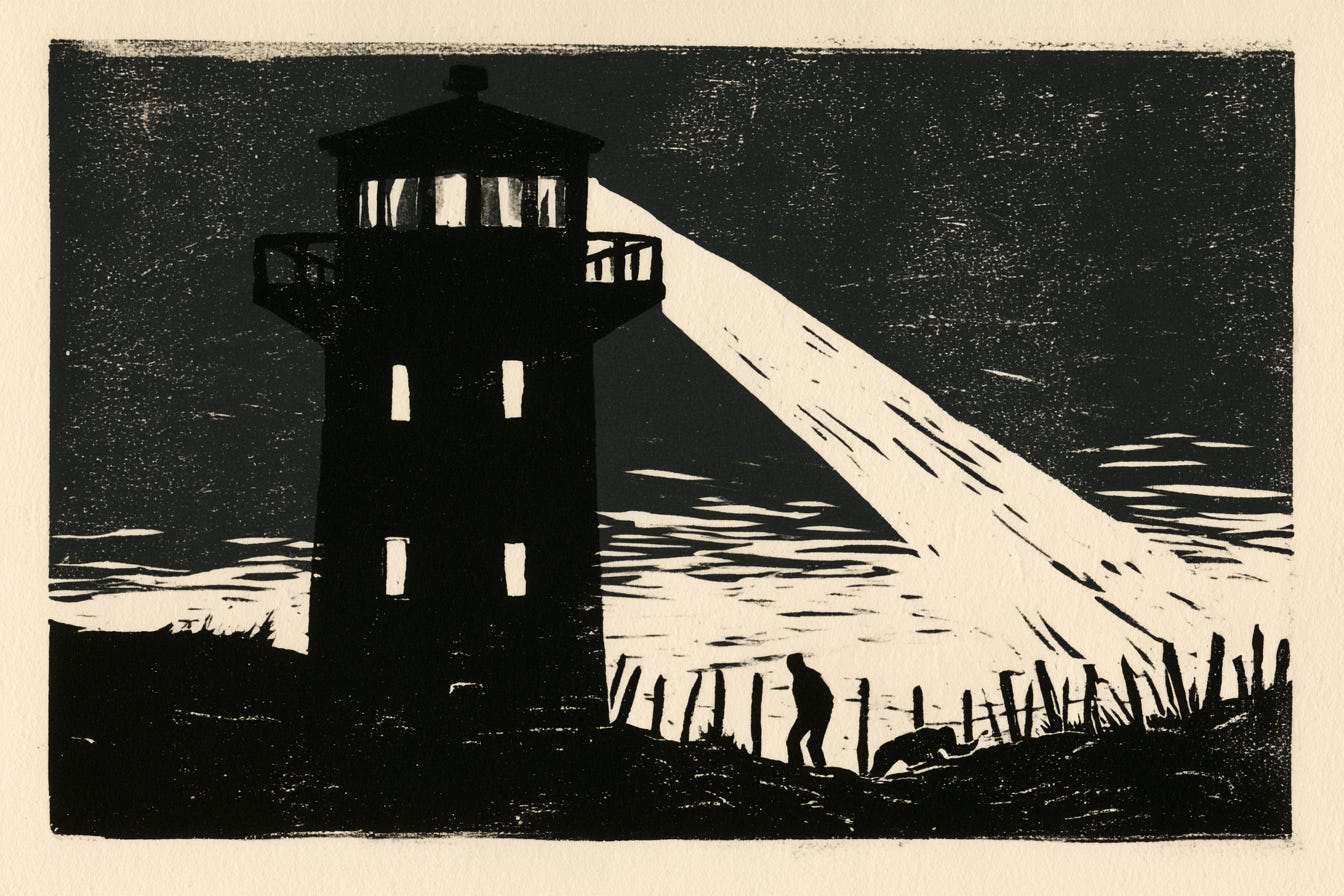
The job was a dead end and everyone in the room knew it, including the people who’d hired us. The title suggested something creative. There was no creative work in it anywhere. The market was bad at the time and it was the best thing I could get.
I remember the phone ringing and having to be polite and competent and listen to someone’s bullshit, knowing very well they had no idea what they were talking about. I remember watching the arms of the clock and it was like wading through molasses. Every morning I’d beep my card at the gate going in and beep it going out, like boarding a train I was stuck on till evening. The hardest part wasn’t the work. It was pretending to work when there was nothing to be done, because you couldn’t just do nothing.
What saved it, oddly, was that there were a dozen of us in the same position. Young, educated, overqualified, and stuck. Misery likes company and some days it was genuinely funny. We had a whole private vocabulary and tactics for the place.
But over months you could see we weren’t all in the same job. Some of the people around me had decided this was it. Nobody announces that. It just turns up in how someone talks about next week, next month, next year.
I couldn’t have decided that. “One more week of this and I will lose my mind” was a sentence I thought regularly, and it was true. Unless I had something that kept my sanity.
I did. In the evenings I was writing a book.
The postgrad came later. That first year it was just the job and the book.
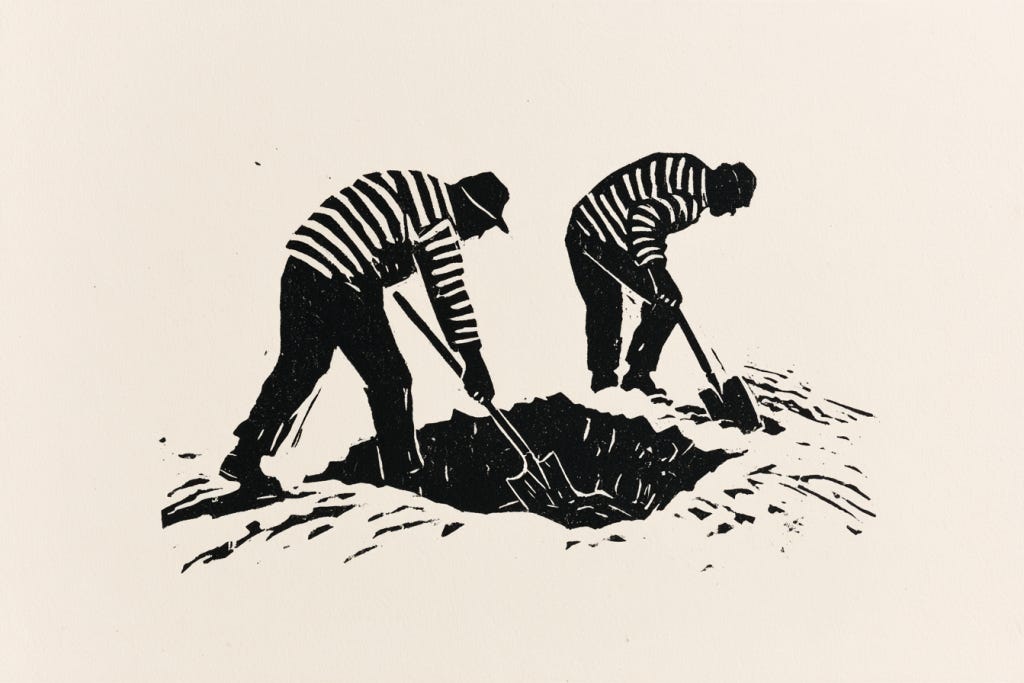
During the day you’re in a form of prison, you obey the rules, you try to play the game. In the evening you dig a tunnel with your little spoon, relentlessly, and hide it behind your bed. It felt almost exactly like that. And all of a sudden, everything had meaning.
Years later I read about Viktor Frankl rewriting his lost manuscript on stolen scraps of paper in the camps. I don’t want to say my case was the same. To some extent it was exactly that. The writing was saving my sanity, my self-respect and my hope.
Then the school joined in, every other weekend in another city. Studying all day, going out with the group in the evening, coming home wrecked and more like myself than I’d been all week. Pure aliveness, if exhausting. It scaffolded my imagination. It made the job I was in temporary, but also not in the waiting-it-out sense.
In that job I had a friend who sat next to me. Same desk arrangement, same tasks. He told me once that most days he’d go home and couldn’t do anything constructive. He’d eat, put something on, read a few pages, go to bed. His life was going past, he could see it happening, hated it, and still couldn’t get up.
Then he asked how I did it. Where I was getting the energy from, when he had nothing left.
I said I had it because of that. It was my secret ally.
He was doing everything right. He wasn’t lazy and he wasn’t weak, he was doing what makes rational sense: energy is a quantity, work spends it, rest replaces it, and if you’re empty you should stop taking things on.
By that logic I was being reckless. I had less recovery time than he did and considerably more going on, and I was fine, and he wasn’t. That doesn’t work as arithmetic.
It only works if the thing being drained isn’t energy.
The job took something else off me, hour by hour, bit by bit, and rest alone rarely puts that back. You can lie down for ten years. I know people who essentially did, out of exhaustion that was real, and they came out the other end no fuller than when they went in. Then reasonably concluded they must need more rest.
What the book gave me was maybe not quite purpose or meaning. Frankly, it was an idea that wouldn’t leave me alone, and I eventually surrendered. But it meant that when someone asked what I did, the answer wasn’t finished after the first sentence. I’m that, and I’m also this, and this. The job wasn’t intolerable. The job being the entire description of me was intolerable, and it was well on its way to becoming that, eight hours at a time.
That book writing stopped the job from being my whole description.
The book couldn’t have paid my rent and I never expected it to. Setting that expectation early was the thing that made it work. I’ve watched a lot of people do the opposite, and I watch them still, on Substack and everywhere else. Someone hates their job. They start making something. It goes well enough that they begin to hope, and then hope becomes a plan, and now the thing has to perform. It has to be consistent and strategic and it has to grow, because it’s been asked to replace an income.
And it stops giving them what they started it for, immediately, because it can’t be pointless anymore. Then they push harder, because that’s what you do when a plan isn’t working, and get more frustrated, and the work gets worse in a way that’s visible from outside.
They often lose both ends. The aliveness goes first, because the work now has a job. Then the money, because most of this work can’t carry that weight and was never built to.
The thing that was supposed to save them became a trap, because they tried to make the thing The Thing too early in the game.
I used to describe the two things as a marriage and an affair, which people find funny and which I’ve stopped using, because an affair comes with a story attached where the marriage is the lie and the affair is the truth. I don’t think one was fake and one was real. They were paying in different currencies and I never asked either one for the other’s.
Compost is closer. The thing rots down and comes back in a form you can’t eat, and it still feeds you. But it’s harder to track.
Something else about my friend that took me years to see the shape of.
He tolerated that job for a long time. Longer than I did. Every morning, the commute, the Sunday feeling, all of it held steadily and without much complaint. That is an enormous capacity for discomfort. Most people have it. It’s one of the more impressive things about us.
And at the same time, he couldn’t spend forty minutes on something he might be bad at. I don’t think that’s a low pain threshold. It’s a high one, allocated to the wrong account.
We’re generous with the difficulty we believe we have no say over and we refuse the difficulty we do. Which is upside down, since the second kind is the only kind that could change anything.
Some of that is straightforward and makes total sense. The endured kind is paying the bills and the school fees. Some of it is that no alternative ever forms in your head at all, and you can’t turn down an option you’ve never seen. That’s perception and imagination. And some of it is that chosen difficulty comes with an author. If you pick it and it’s a waste of two years, that’s yours. You own it.
So true! Rest is not the only way to gain energy. Doing something with purpose and passion is restorative. Often it requires a threshold for discomfort as you describe, but the elation you feel when you've created something with your own mind and hands is an incredible anti-depressant.
I feel we should prescribe creative endeavours. Two haikus a day. Half a page of doodles in each morning. Something new and interesting that restores the mind and brings creative sunlight into life.
We need to broadcast that this is an answer, since so many people find themselves in unfulfilling situations with only sleep and annual leave to punctuate it.
Love love love the artworks